

By Katie Sorensen, NP-C | Weight Loss NP
Retatrutide vs. Semaglutide vs. Tirzepatide: What ADA 2026 Means for Medical Weight Loss
Retatrutide had a major moment at the American Diabetes Association Scientific Sessions this week.
If you follow GLP-1 weight loss news, you have probably seen the headlines: dramatic weight loss, strong metabolic data, and comparisons to bariatric surgery-level outcomes. It is exciting! It is also important to be very clear about what retatrutide is and what it is not.
Retatrutide is not FDA approved yet. Therefore, it is not available through Weight Loss NP. It should not be purchased from black market, “research peptide,” social media, or overseas sources as the risk related to injecting these unproven substances into your blood stream are simply to great.
At Weight Loss NP, we are watching the retatrutide data carefully because the science is promising. We also feel strongly about following evidence-based clinical guidelines and using FDA-approved medications because safety and efficacy are our highest priority. For patients in Denver, Arvada, Colorado, Utah, and Florida, our priority is medically supervised weight loss using treatments with established regulatory review, appropriate monitoring, and a full, personalized metabolic plan.
If you are looking for safe medical weight loss care now, we have excellent options that you can learn more about here: GLP-1 weight loss program and other services.
What Is Retatrutide?
Retatrutide is an investigational once-weekly injectable medication being studied for obesity, type 2 diabetes, and related metabolic conditions.
It is often described as a “triple agonist” because it targets three hormone receptors:
- GLP-1
- GIP
- Glucagon
This is different from semaglutide, which primarily targets GLP-1, and tirzepatide, which targets GLP-1 and GIP.
That third glucagon pathway is one reason researchers are so interested in retatrutide. Glucagon signaling may affect energy expenditure, liver metabolism, and fat loss in ways we are still learning about. This is part of why the ADA discussion has been so active among obesity medicine clinicians.
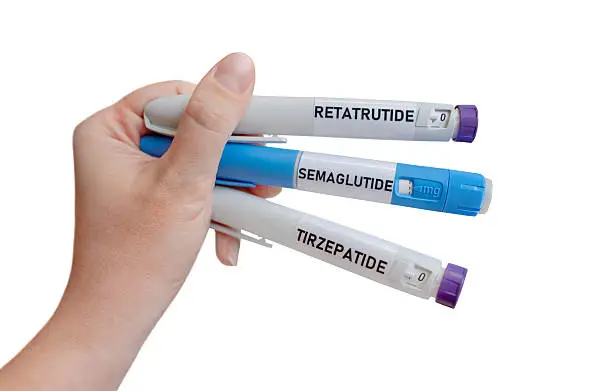
Retatrutide vs. Semaglutide vs. Tirzepatide
Here is the simple comparison.
Semaglutide is a GLP-1 receptor agonist. It is the medication in Wegovy for chronic weight management and Ozempic for type 2 diabetes.
Tirzepatide is a dual GIP and GLP-1 receptor agonist. It is the medication in Zepbound for chronic weight management and Mounjaro for type 2 diabetes.
Retatrutide is an investigational triple agonist that activates GLP-1, GIP, and glucagon receptors. It is still being studied and is not FDA approved.
Retatrutide is likely to be an important tool in obesity and metabolic medicine, upon it’s likely FDA approval soon.
What Came Out of ADA 2026?
The headline number getting the most attention is the reported average weight loss of 28.3% at 80 weeks in the highest-dose retatrutide group.
That is an incredible result. It is part of why people are comparing retatrutide to outcomes that historically were more associated with bariatric surgery than medication.
But the broader ADA conversation was not just about the scale.
The data also included discussion around cardiometabolic health markers such as blood pressure, cholesterol, triglycerides, inflammatory markers, and type 2 diabetes outcomes. For clinicians, this matters because obesity treatment should not only be judged by pounds lost. It should also be judged by improvements in metabolic health, cardiovascular risk, mobility, blood sugar, quality of life, and long-term safety.
This is where obesity medicine is heading. We are moving away from “How much weight can someone lose?” and toward “Can we reduce disease risk, improve function, protect muscle, and support long-term health and longevity?”
Why Retatrutide Is Exciting
Retatrutide is exciting because it may represent the next generation of incretin-based obesity treatment.
The potential benefits being studied include:
- Greater average weight loss than current medications in some trials
- Improvements in A1C for people with type 2 diabetes
- Possible cardiometabolic improvements
- Effects on appetite, food noise, and reward pathways
- Possible benefits related to inflammation, cravings, and metabolic function
Patients have also been talking for years about changes beyond appetite with GLP-1 medications, including reduced food noise and changes in cravings. Researchers are now working to better understand those pathways.
This is promising. It is also still evolving. We need complete trial data, peer-reviewed publications, regulatory review, prescribing information, real-world safety monitoring, and clinical guidelines before retatrutide becomes a standard treatment option.
Retatrutide Is Not FDA Approved
This is the part I want to be very direct about.
Retatrutide is not FDA approved. It is not available through legitimate prescription channels for weight loss. Any product being sold online as retatrutide right now is not an FDA-approved medication.
That includes products marketed as:
- Research peptides
- Retatrutide for “lab use”
- Generic retatrutide
- Compounded retatrutide
- Overseas retatrutide
- Black market GLP-1 medication
These products may be contaminated, underdosed, overdosed, mislabeled, stored incorrectly, or completely fake. With injectable medications, purity and sterility are essential to safety. Proper medical care and oversight is also critical to best outcomes.
Why FDA Approval Is Important
FDA approval is not just a technicality.
It means a medication has gone through a formal review process for safety, efficacy, manufacturing quality, labeling, dosing, contraindications, adverse events, and appropriate use.
That does not mean FDA-approved medications are risk-free. GLP-1 and GIP medications can still cause side effects, and they are not appropriate for everyone. But approval and regulation create a safer framework for prescribing, monitoring, and patient education.
This is why we use evidence-based clinical guidelines and FDA-approved medications in our practice.
For patients in Colorado, Utah, and Florida, that means we help you understand the medical weight loss options that are available now, not just what is trending online.
What Can Patients Use Now?
Right now, safe medical weight loss care may include FDA-approved options such as semaglutide or tirzepatide when clinically appropriate, along with nutrition, strength training, protein goals, side effect management, lab review, and long-term maintenance planning.
Medication alone is not the whole plan.
A strong medical weight loss plan should include:
- A personalized medication strategy
- Protein and muscle preservation goals
- Fiber and hydration support
- Strength training guidance
- Side effect prevention and management
- Lab monitoring when appropriate
- Sleep and stress assessment
- Maintenance planning before goal weight
- Hormone evaluation when symptoms suggest it
This is also why our work often overlaps with hormone health, including TRT services for men and HRT evaluation for women when clinically appropriate.
Should You Wait for Retatrutide?
For most people, waiting for a medication that is not yet approved is not the best strategy.
If you have obesity, insulin resistance, prediabetes, type 2 diabetes, high blood pressure, sleep apnea, fatty liver disease, joint pain, or weight-related health concerns, treatment now may still be appropriate and can really move the needle toward you achieving your goals.
Retatrutide may become an option in the future and we are watching it closely! We can always switch patients from tirzepatide or semaglutide to retatrutide when it becomes available through appropriate channels and if it’s medically indicated at that time.
The right question is not “Should I wait for the next drug?”
The better question is “What is the safest, most effective plan for my body right now, and where can I get the most cutting edge evidenced based care that will evolve with me and my health?”
Medical Weight Loss in Denver, Colorado, Utah, and Florida
Weight Loss NP provides medical weight loss support for patients in Denver, Arvada, Colorado, Utah, and Florida. We also provide non-medical GLP-1 and weight loss coaching nationwide.
We are excited about the future of obesity medicine. Retatrutide may become a major part of that future once it’s FDA approved. We are committed to being on the cutting edge of safe, effective metabolic and obesity care at Weight Loss NP.
If you are curious about GLP-1 medications, tirzepatide, semaglutide, or medical weight loss options available now, start with a FREE consultation – schedule today!
No. Retatrutide is not FDA approved as of June 11, 2026. It is still investigational and should not be purchased from black market, research peptide, or unregulated online sources. As of June 11, 2026, the only place to get retatrutide are from the black market, despite what advertising claims may state.
Semaglutide targets GLP-1. Tirzepatide targets GLP-1 and GIP. Retatrutide is an investigational triple agonist that targets GLP-1, GIP, and glucagon receptors.
Not yet. Weight Loss NP does not prescribe retatrutide because it is not FDA approved. Our practice uses evidence-based clinical guidelines and FDA-approved medications to prioritize safety and efficacy for our patients. We will offer it as soon as it’s FDA approved.
FDA-approved options for weight management may include semaglutide or tirzepatide when clinically appropriate. The right medication depends on health history, goals, contraindications, side effects, cost, and medical supervision.










+ show Comments
- Hide Comments
add a comment